Planned work01
Repair, replace, or get a second look.
Tell us what you have noticed. We will inspect the roof, explain the options and put the proposed work in writing.
Roofing & exterior repair · Chicago
Roof repair, replacement and storm-damage work for Chicago’s South Side. A clear scope. Careful work. Every detail documented.
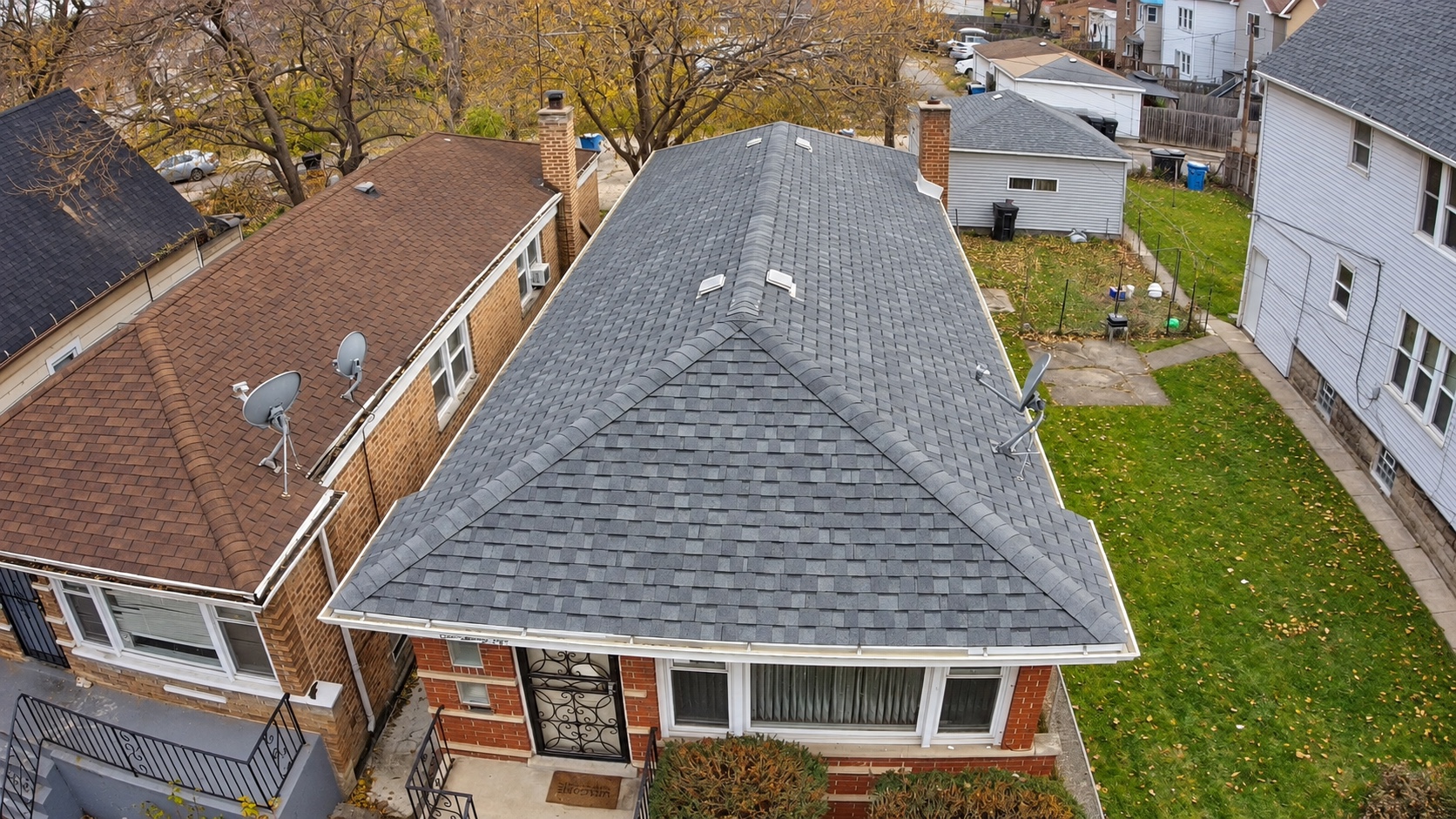
GWO project photographA finished roof on Michigan Avenue
Trusted on public work
GWO Inc. has served public agencies that expect clear scopes, careful documentation, safety and accountability. GWO Residential brings that experience to Chicago homeowners, beginning with roofing and related exterior work. From the first inspection to the final walkthrough, you should understand the work and have a record of what was completed.
Selected public-sector customers
 U.S. Army Corps of Engineers
 City of Chicago · Department of Housing
 Chicago Housing Authority
 Metropolitan Water Reclamation District
 Cook County
 U.S. Department of Agriculture
Agency names and marks identify past customers only. No endorsement is stated or implied.
Start with what you know
A ceiling stain, missing shingles or water after heavy rain can be the first sign. On a flat roof, you might notice standing water, an open seam or worn coating. Tell us what changed and when you noticed it. The inspection helps connect that symptom to the roof above.
Water coming in? Call the office.
Tell us what you have noticed. We will inspect the roof, explain the options and put the proposed work in writing.
Start with photographs of the observed damage and a written repair scope. Whether you pay directly or pursue an insurance claim, those findings help you understand the construction work being proposed.
Your insurer determines coverage.
Selected residential work
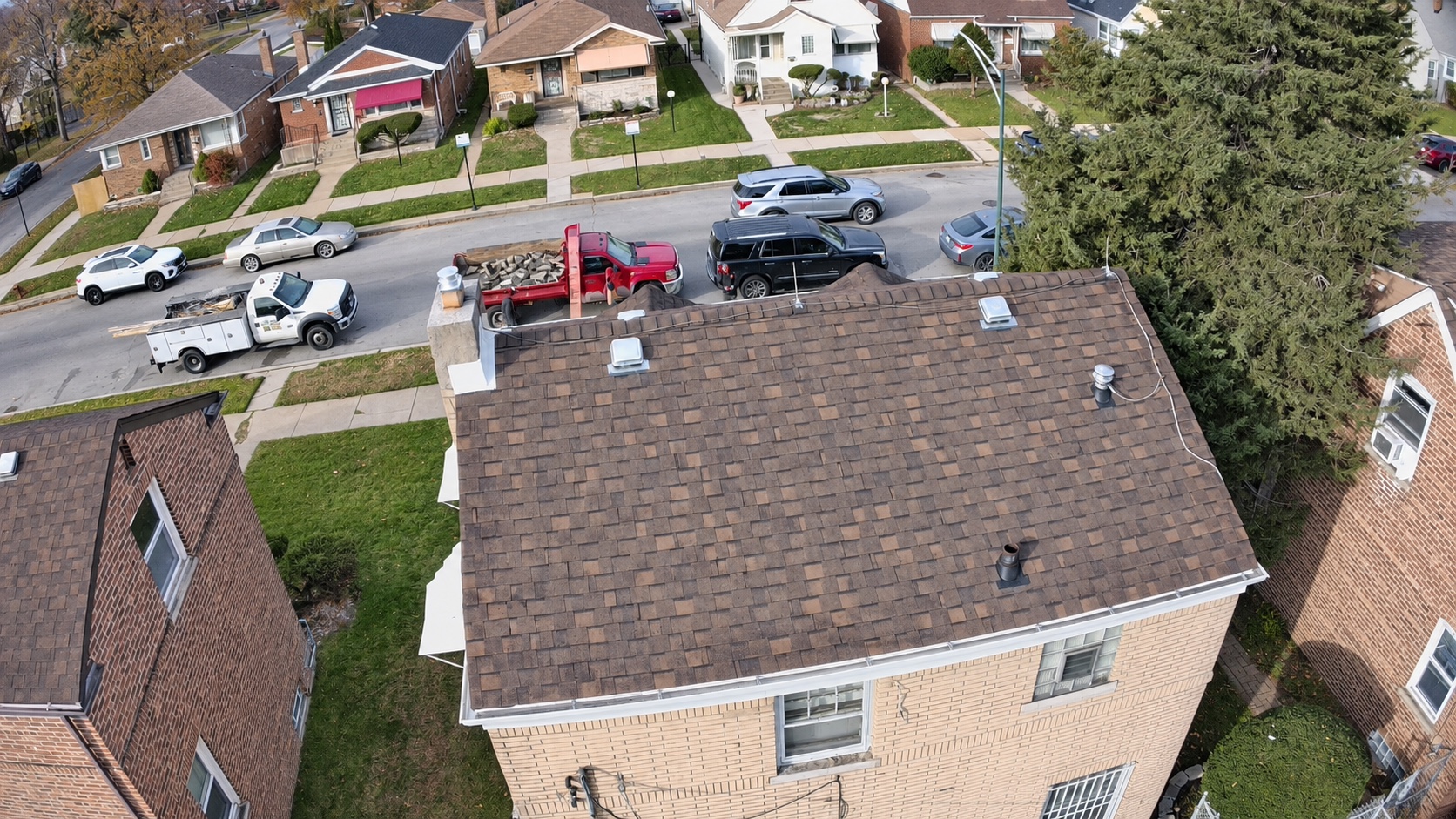
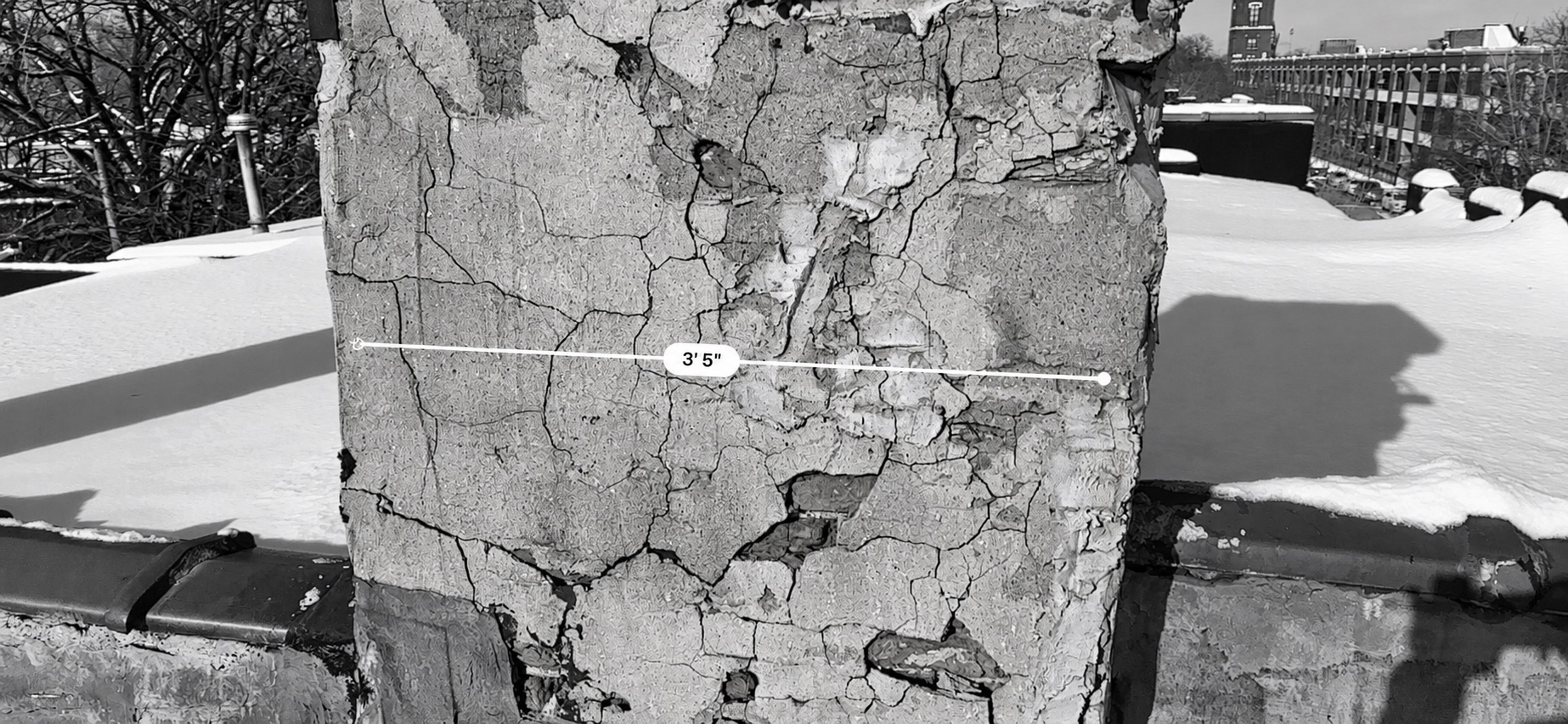
Follow the work on Chicago homes: the condition we started with, the details uncovered during construction and the finished roof. Open a project for a closer look.
Roofing comes first
From the field of the roof to the places water finds first, the scope stays connected.
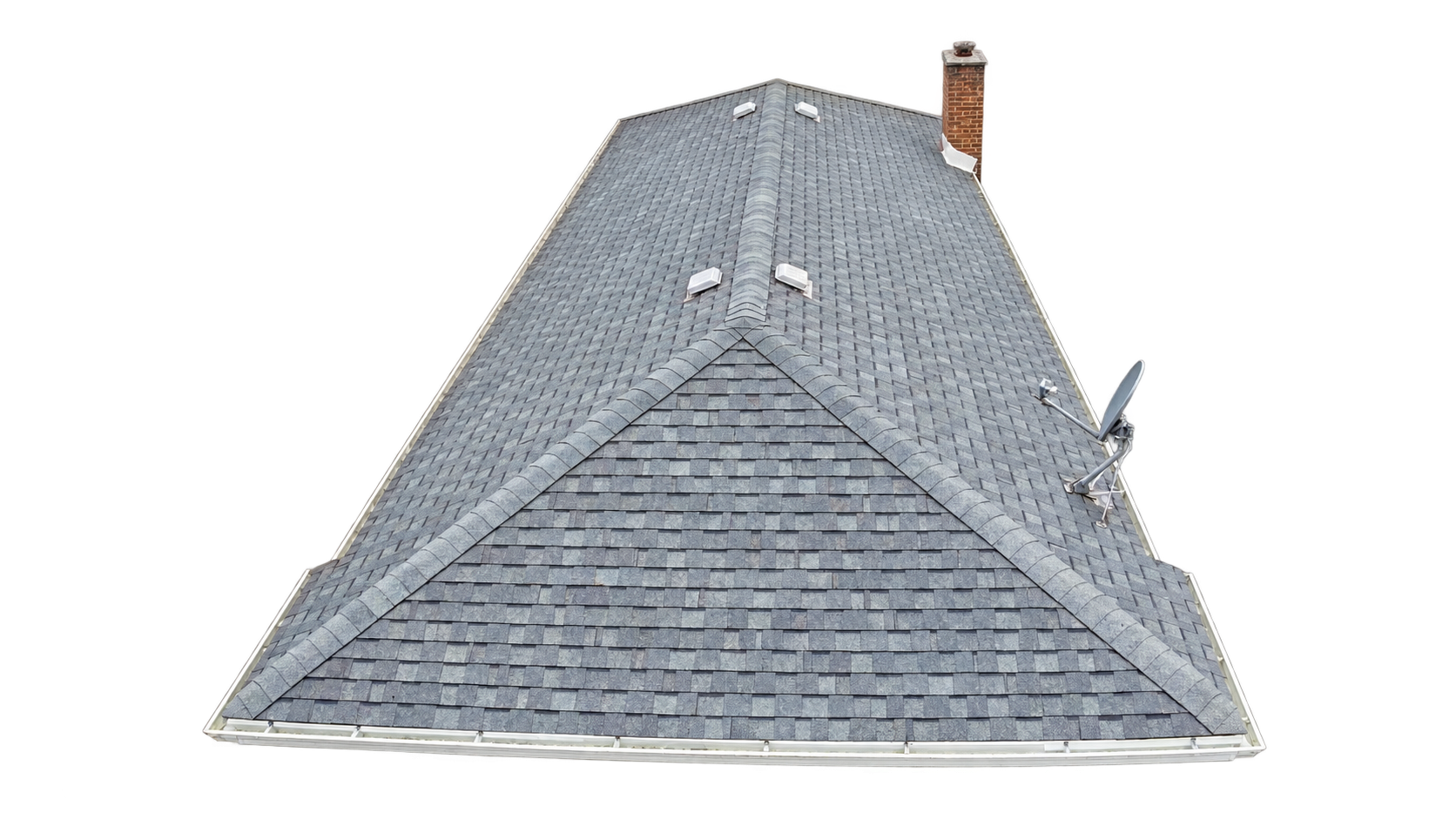 01Shingle field
02Ridge
03Roof edge
01Shingle field
02Ridge
03Roof edge
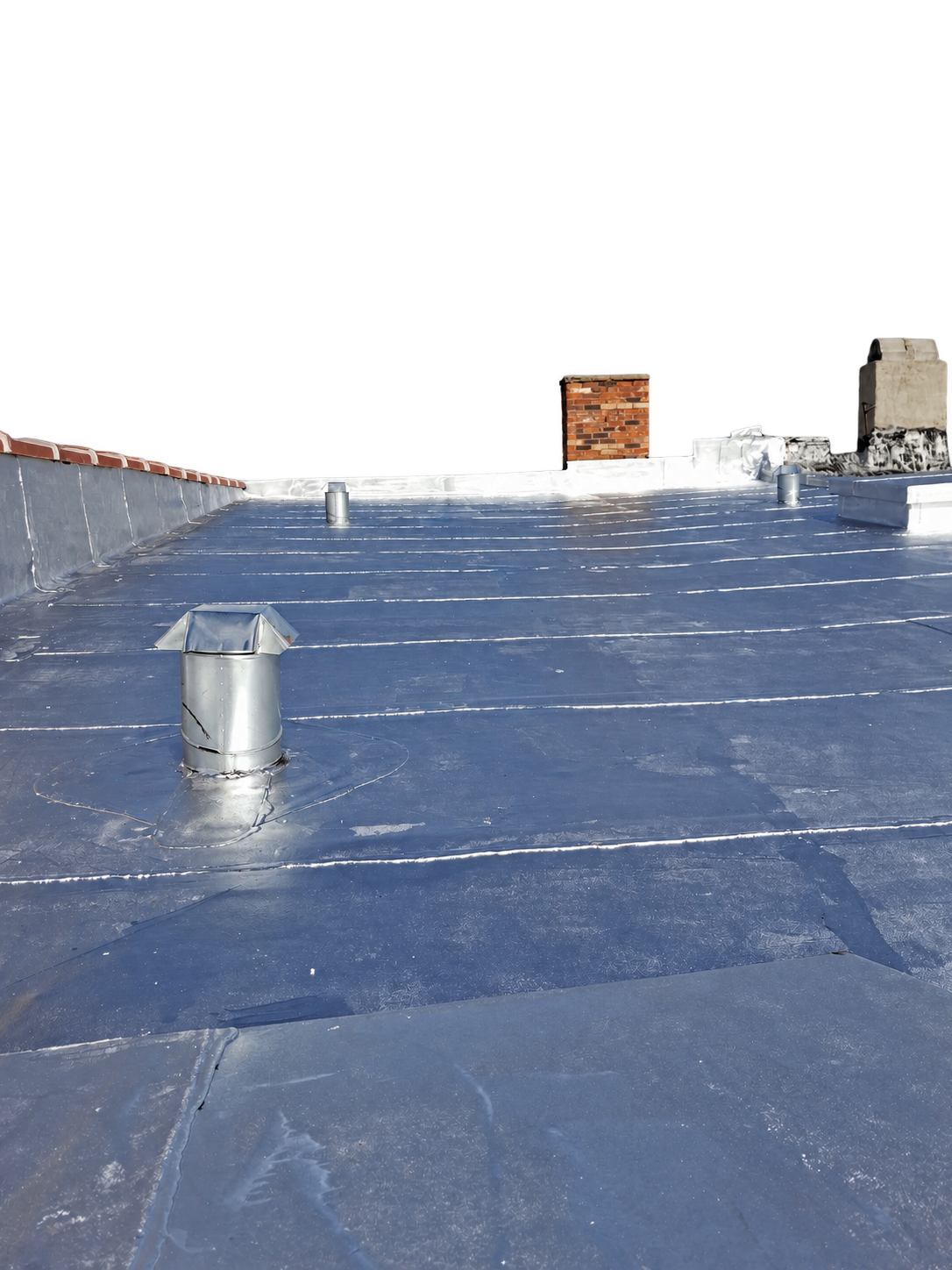 01Roof field
02Penetrations
03Parapet
01Roof field
02Penetrations
03Parapet
Tear-offs and architectural-shingle replacements for Chicago homes. The scope considers the wood deck, underlayment, ventilation and flashing—the protective details around chimneys, valleys and roof openings. The selected materials and work belong in the written estimate.
Modified bitumen and reflective coatings for two-flats, additions and garages. Seams, drains, penetrations and parapets—the walls extending above the roof edge—all affect performance. We review those connections along with the roof surface and areas of standing water.
Missing shingles, open seams, flashing failures and active leaks. We inspect the likely entry points, photograph observed conditions and define the proposed repair area. The condition of the surrounding roof helps determine how much a localized repair can accomplish.
Choosing the scope
The location and extent of damage, previous repairs, drainage and the condition beneath the surface all matter. Inspection comes before a recommendation.
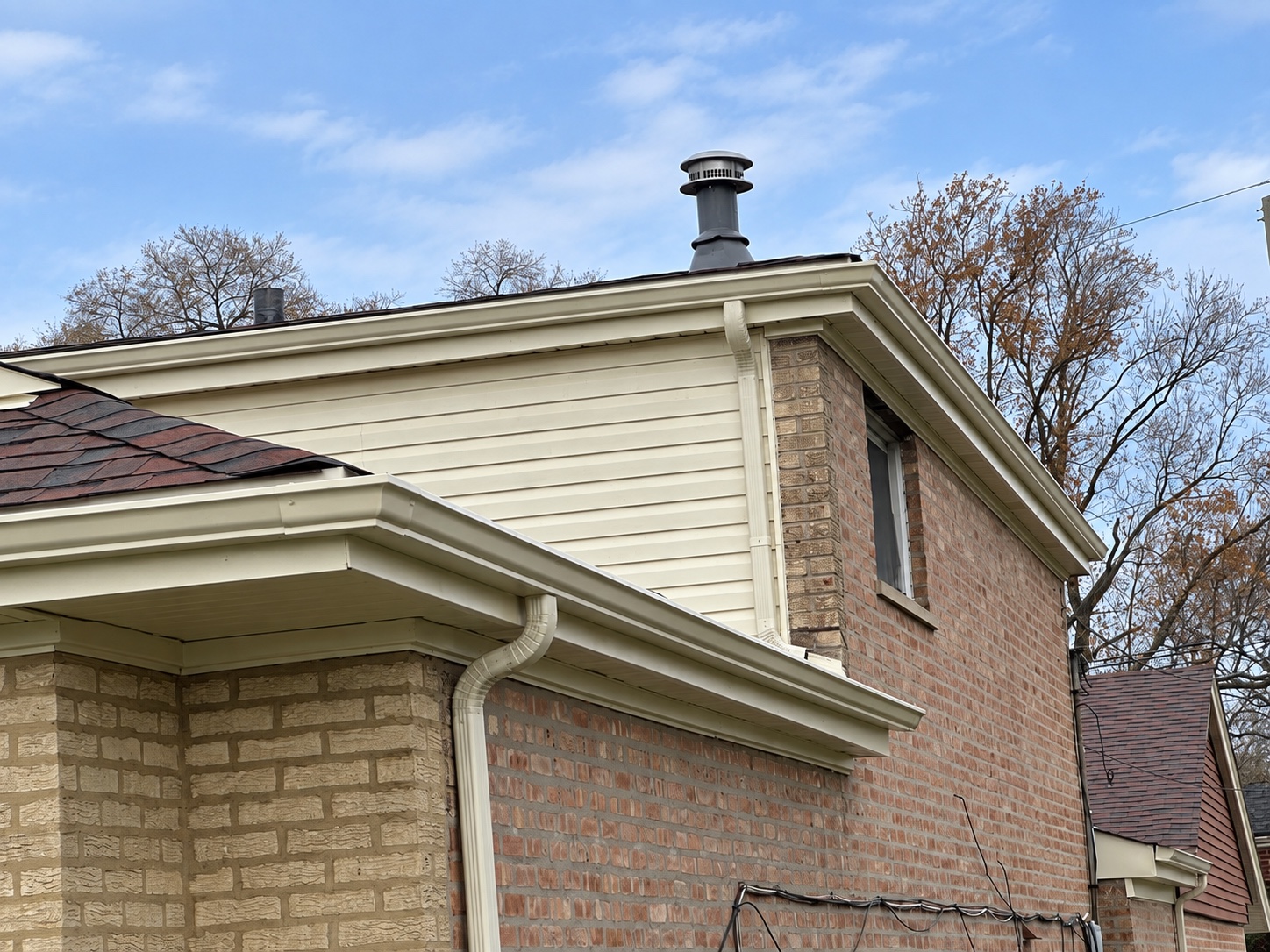
Related exterior work
Gutters, fascia, soffit and chimney flashing help manage water at the edges of a home. A leak near a chimney may involve both roofing and masonry. We consider those connections when defining the work, so the scope addresses how the parts meet.
From first look to closeout
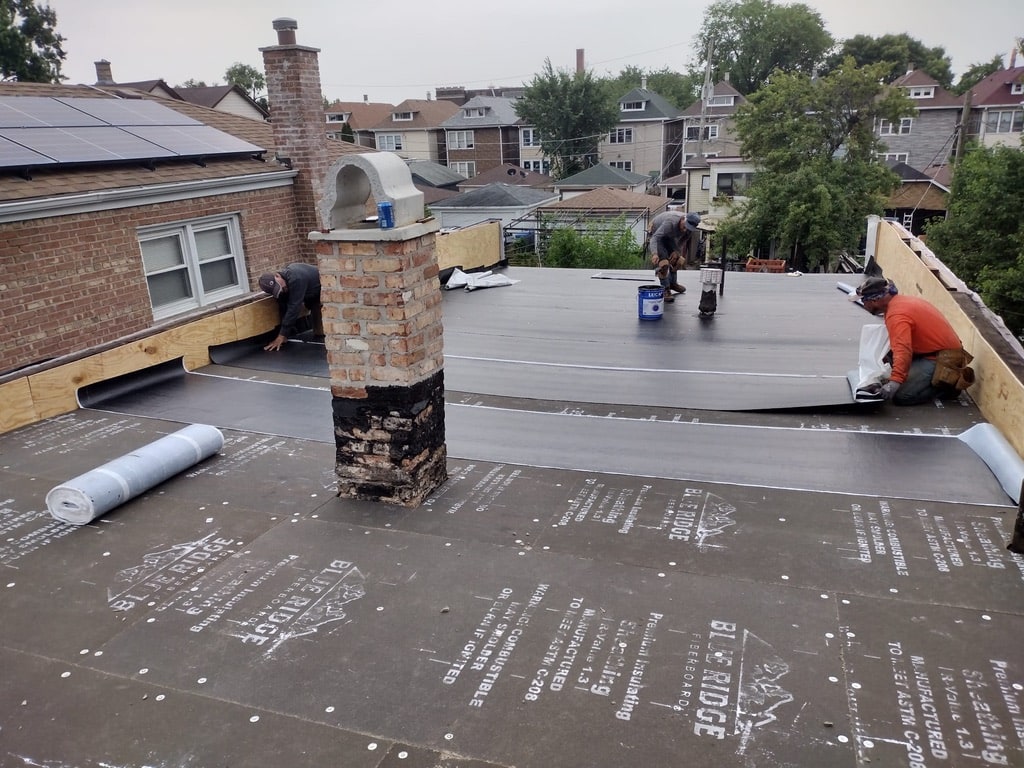
We listen to what you’ve noticed, review accessible roof surfaces and connections, and photograph the observed conditions.
Review the findings, proposed materials and work area in a written scope. Discuss access, scheduling and how concealed conditions could affect the work.
The agreed work is completed with careful site protection and daily cleanup.
Final photos and a walkthrough make the finished details easy to verify.
We look for visible damage and active water entry, then photograph what we find.
You receive construction findings and a written scope for the work observed.
Once the scope is agreed, the crew completes the defined repairs or replacement.
Final documentation shows the completed details, including what is hard to see below.
What good documentation feels like
Before work begins, the estimate should identify the work area, proposed materials, preparation and removal included in the price. Payment terms, anticipated timing and applicable warranty details should be clear enough to compare and discuss.
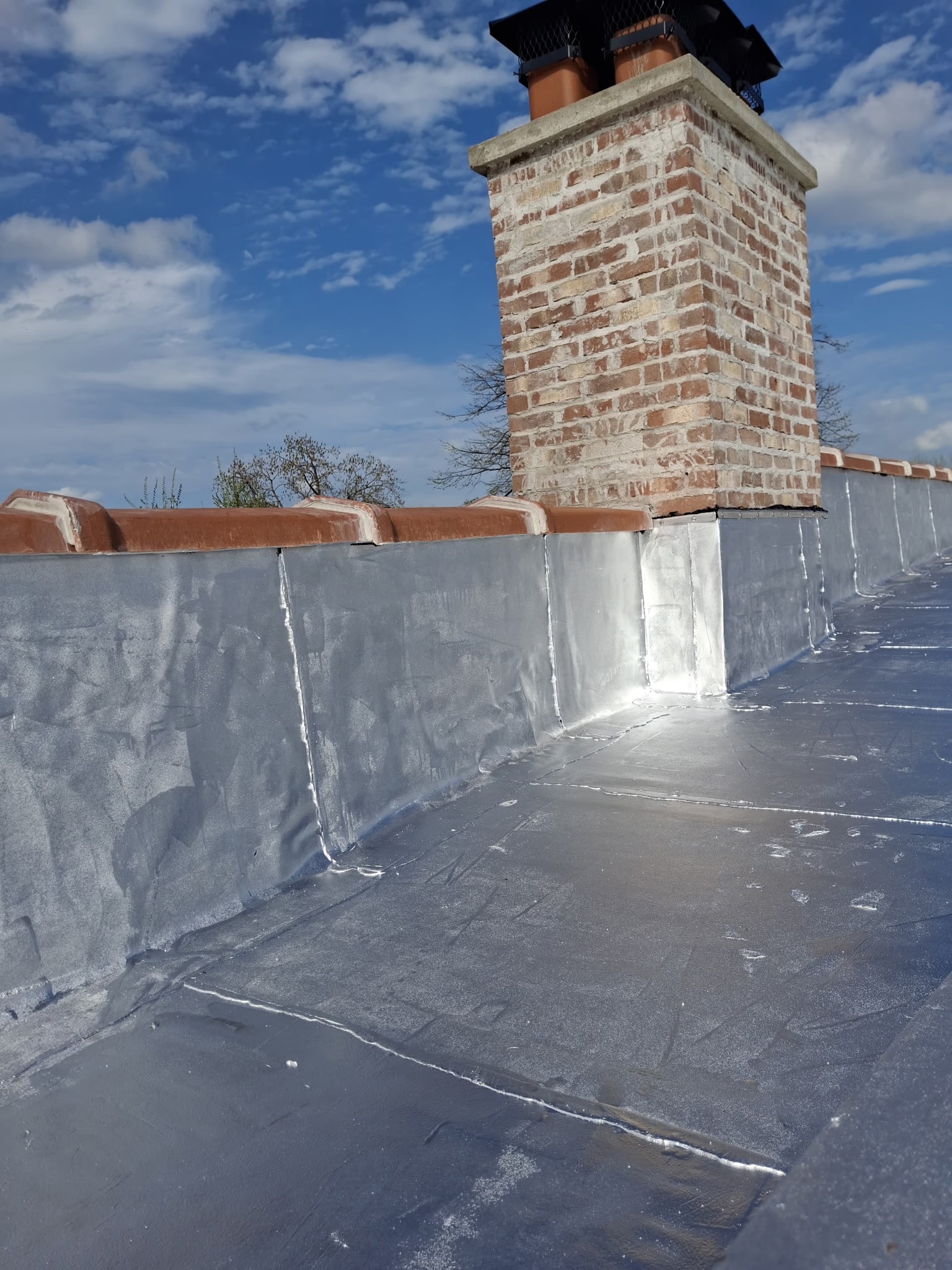
Start with a clear picture
GWO Residential serves Chicago’s South Side and nearby communities. Share what you know now; the inspection is where the details get sorted out.
Prefer to talk?(708) 330-4425GWO Inc. · 1035 W. 111th St., Chicago
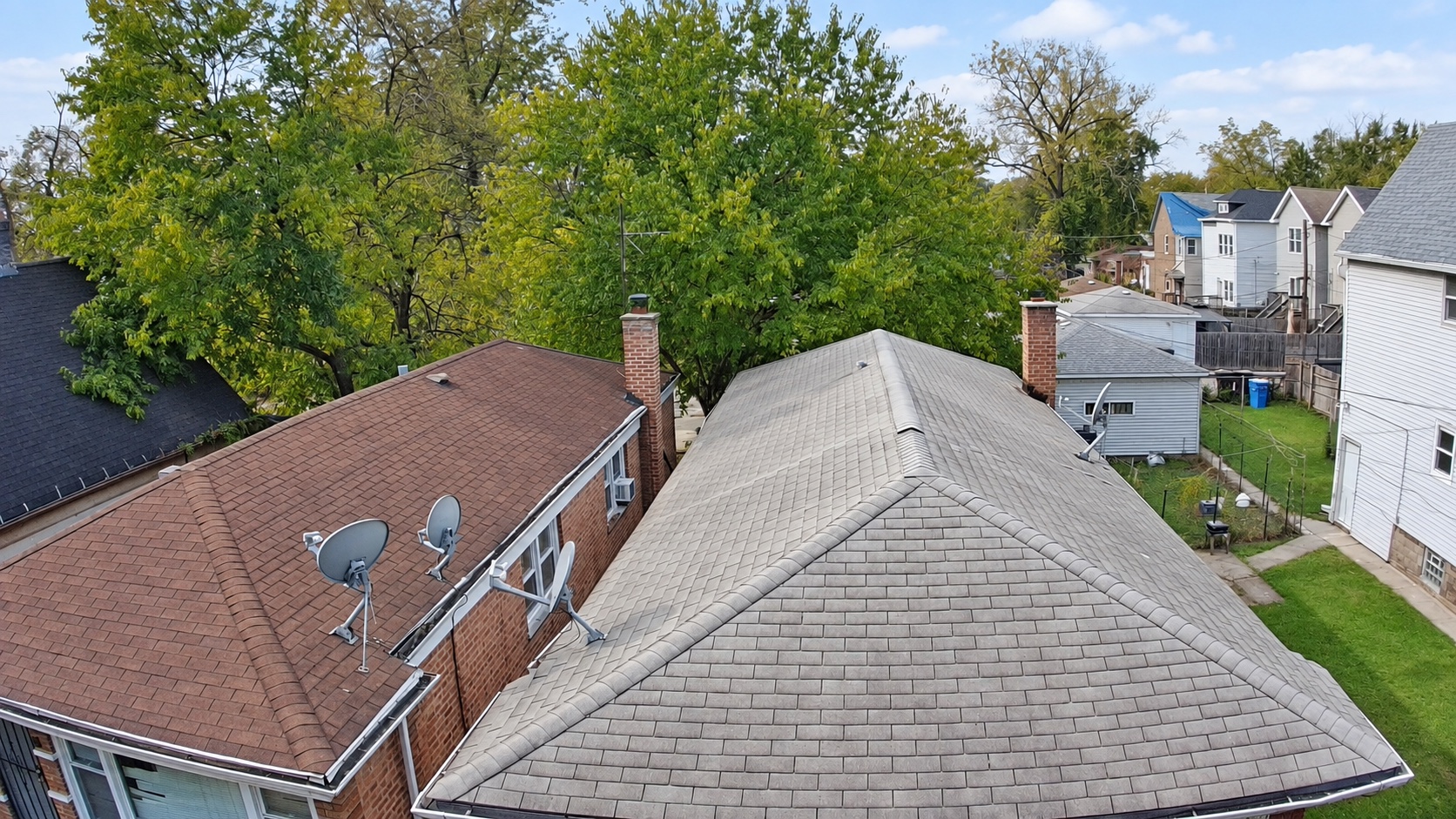
A new chapter for a familiar home.Michigan Avenue · GWO roofing
Good questions
A localized failure may be repairable if the surrounding roof is sound. Widespread wear, recurring leaks or deteriorated decking can call for a broader scope. Age is one factor; the inspection findings, previous repairs and condition of the full system should guide the decision.
Look for the work area, proposed materials, removal and preparation, disposal, payment terms, anticipated schedule and applicable warranty information. Ask which items are included, which are excluded and how concealed damage will be handled. Comparing those details helps explain differences between prices.
Some wood-deck conditions only become visible after the old roofing is removed. The affected area should be photographed and the proposed repair explained. Before authorizing work, ask how your estimate handles decking repairs, pricing and written approval of changes. Our featured project shows this stage.
That depends on the existing system and the source of the leak. A coating requires a suitable, properly prepared surface. Open seams, damaged flashing, trapped moisture or drainage problems may need other work first. Inspection helps establish whether coating, repair or replacement is appropriate.
Discuss driveway access, material delivery, landscaping, outdoor belongings and entry points before the crew arrives. Roofing can be noisy and cause vibration, so plan for pets and work-from-home needs. Confirm the cleanup arrangements, weather plan and who to contact with questions during construction.
Water can travel before it becomes visible indoors. Roof-to-wall connections, chimney flashing, masonry and overflowing gutters can contribute to water entry. Tell us where and when you see it, including whether it follows wind-driven rain. Those observations help focus the inspection.
GWO inspects visible conditions, provides project photographs and prepares a written construction scope. That record describes the proposed repair work. Your insurance company interprets your policy and determines coverage, deductibles and payment. Questions about those decisions belong with your insurer.
Start with the property ZIP code, the type of roof if you know it, what you’ve noticed and whether water is entering now. Previous repair information and photographs you already have can help. You do not need to identify the roofing system or diagnose the problem before calling.